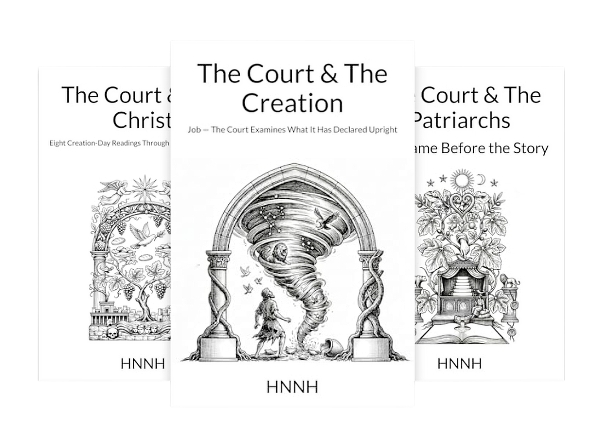
Author Background
HNNH is a researcher and writer focused on the structural and linguistic analysis of Scripture. The work examines the biblical text as a self-consistent system tracing Hebrew naming conventions, Genesis creation categories, and narrative mechanics, before the interpretive frameworks of theology or religious tradition are applied.
HNNH's writing is rooted entirely in the text itself. The Hebrew divine names — YHVH, Elohim, Ehyeh — are not translated into personal titles but examined according to their lexical and structural meanings as defined in Strong's Concordance. The Genesis creation categories are traced forward through the wider biblical narrative to show how the same vocabulary operates across different books and periods.
What This Work Is Not
This is not theology. Theology begins after two assumptions are already in place: that the text is primarily a historical record, and that the divine name designates a personal being. These assumptions determine every conclusion that follows from them. This work begins earlier, at the level of the Hebrew words themselves, the structural patterns within Genesis 1–2, and the way those patterns are drawn on by the wider narrative. No theological or denominational position is advanced or assumed.
This is also not devotional commentary. The analysis does not draw on religious tradition, church teaching, or prior interpretive consensus. Where existing scholarship is relevant, lexicography, concordance data, comparative textual analysis — it is cited. The conclusions emerge from the structural examination of the text, not from a position of belief.
The Textual Framework
"And no man puts new wine into old bottles..." — Mark 2:22
The framework developed here — Lingua Divina — identifies the Genesis creation categories (day one deep, day three dry land and vegetation, day five sea creatures, day six man) as the fixed structural vocabulary the wider biblical narrative draws on. When Jonah descends into the sea and is deposited on dry land, the text is using the Genesis day-sequence in a specific order. When Jesus cites that sequence in Matthew 12:40, he names the structure directly. The framework reads these as textual mechanics, not miraculous events.
The Hebrew naming conventions operate by the same principle. In Strong's Concordance, Ehyeh (I AM) is the first person form of the verb hayah — to be. YHVH is its third person form. Elohim is plural. Exodus 3:14 does not declare a personal name. It declares a grammatical structure. The framework reads the narrative according to what those words mean in Hebrew — not according to how they have been rendered in translation.
Commitment to Textual Precision
Every interpretation on this site is traceable to a specific passage, a specific Hebrew or Greek lexical entry, or a specific structural pattern within the Genesis creation sequence. The analysis does not require the reader to adopt any prior position. The connections visible in the text are stated plainly, with the source passages cited, so that the reader can verify them directly against the biblical text and the concordance.
Connect & Explore:
Lingua Divina
HNNH Studio
Reddit
Amazon Author Profile
Disqus
