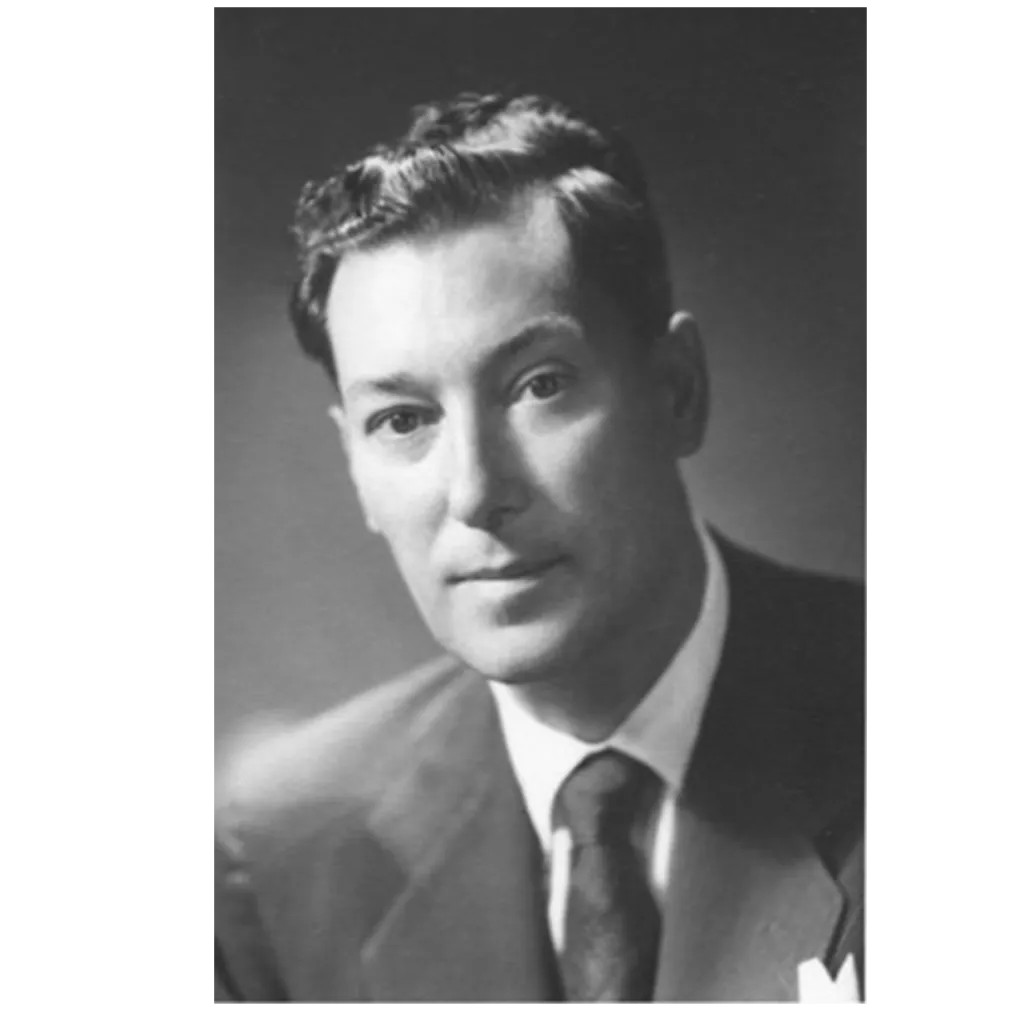
Neville Goddard read Scripture as one drama, not a sourcebook of symbols, and he taught that its characters are states, not people. That is why his work is where many readers start, and the Law of Assumption is the starting influence for this site. He also named Genesis the seed plot of the whole Bible, but he reads that seed through Jesus. Lingua Divina reads Genesis as the vocabulary that governs everything after it. Set side by side, the two readings part in three places: the direction, the mechanism, and what counts as proof.
What Neville Pointed To
He pointed to what the Bible already says. Abraham, Isaac, Moses and Jesus are not historical figures to admire but states, which he called personifications, not persons. Names carry the nature of the state: Isaac is "he laughs," Moses is "to be born," and he sent listeners to Strong's for the word translated "seed" in Galatians 3:16. He read the Maker as the husband from Isaiah 54:5 into the cleaving of Genesis 2:24. He taught that people meet their own harvest and forget when they set it in motion, and he taught assumption as a practice: hold the state as already true until it hardens into fact.
Those are real points of contact with this framework: names as identity codes, leave and cleave and Ask, Believe, Receive. He was not the only inward reader, either. Swedenborg's Arcana Coelestia (1749-1756) is a verse-by-verse inner reading of Genesis and Exodus, and it takes the creation story as the forming of the mind. What sets both men apart from this framework is where the authority sits. Each carries his own visions and teaching alongside the text.
Where His Reading Runs
Resurrection (1966) is organised by the life of Jesus. It moves through four acts, an emergence from the skull, the son David calling him Father, a lightning along the spine, and a descending dove, and the Old Testament is read as the blueprint for them. His lecture titles carry the same weight: "The Only Christianity," "Jesus Only," "Jesus: God's Plan of Salvation."
Neville does name Genesis the seed plot of the whole Bible. In "Whom God Has Afflicted" he calls it the "seed" plot of the entire Bible, all there but only an adumbration, a foreshadowing. In "Prophetic Sketches" (1967) he calls it the seed-plot of the Bible, and he opens "The Bible – Your Biography" (1963) with the book's first words, "In the beginning God," and its last, "in a coffin in Egypt." So the difference is not whether Genesis matters but what it is used for. For Neville the seed is only foreshadowing until Jesus fulfils it. In Resurrection, Genesis 1:26 and Genesis 2:24 each appear once. In the 1968 lecture on Genesis 3:16, the verse is read through Isaiah 54:5 more than through the Genesis narrative around it: childbearing becomes falling in love with ideas, and the husband is the Maker. In 1972 he states the direction himself: "The New interprets the Old, not the other way around."
Where This Framework Runs
Lingua Divina starts from the passage's own narrative and from Genesis. Each section of an article names the passage element first and then the Genesis category it anchors to, with the surrounding narrative for context. The engine is stated once, in terms of YHVH, I AM and Elohim. YHVH presents an identity, I AM is the identity assumed, and Elohim, the judges and rulers within the reader, enforce it according to the statutes of the creation story. Identity is the unit because that is how Genesis 1:26 makes it.
How the Stories Link Back to Genesis
Here is what that looks like in the articles.
Jonah. Nineveh is named "that great town," the same designation Genesis 10:11-12 gives the city Nimrod's empire built. Jonah sinks into the deep (Genesis 1:2, day one), is enclosed by the great fish (Genesis 1:21, day five), is set on dry land (Genesis 1:9, day three) and is covered by the gourd (day three, vegetation). One story runs four creation categories in order, and Matthew 12:40 names that structure itself.
Ecclesiastes. Hevel and Abel share a root. The garden word gan appears in both Ecclesiastes 2:5 and Genesis 2:8. The return to dust in Ecclesiastes 12:7 echoes Genesis 2:7 and 3:19. The book uses only Elohim and never YHVH, and it ends at the bench with a verdict instead of a delivered I AM, which is the contrast with Jonah.
Esther. The star thread runs back through Genesis: the seed multiplied like the stars (Genesis 15:5) and the stars set on day four to rule the night with the lesser light (Genesis 1:16).
Each of these is a vocabulary link you can look up, not a theme to take on trust. The rule on this site is that a connection counts only when the word or category is there in the text and, for names and terms, in Strong's.
Where the Mechanism Parts
Who acts. In both lectures Neville describes one being who plays every part, including the people met in dreams. In Lingua Divina the actors are the reader's own consciousness (YHVH), the identity assumed (I AM) and the reader's internal court (Elohim). Nothing outside the reader is personified.
Whether the outcome is fixed. In the 1969 lecture the main drama is already accomplished, no one can be lost, and Pharaoh's hardened heart is part of the play. Assumption works in what he calls the world of Caesar. In Lingua Divina Elohim enforces whatever identity is presented, so if YHVH files lack, Elohim rules for lack (sin as a false filing). This is the sharpest difference, because it changes what the text is for.
What the names are. In the 1972 lecture he notes that Elohim is translated "God" and YHVH "Lord," then says the name actually revealed is Father, and he treats I AM, Jesus and Jehovah as one being. In Lingua Divina, Elohim, YHVH and I AM are three roles in one mechanism, and the court is the reader's own.
Where authority comes from. Neville rests on his own visions, including meeting Blake in the 1969 lecture, and on the New Testament letters. Lingua Divina rests on the passage's own narrative, with Hebrew and Greek words checked against Strong's occurrence lists before any claim about them is made.
Why His Work Is Hard to Pin Down
Resurrection carries traditional doctrine alongside its inner reading: incarnation language, a plan of salvation, grace and a Savior. It also draws on Blake, on poets and on the Babylonian Talmud as well as Scripture. His terms move too. Jesus is the Father who became man in the 1966 book, redeemed humanity gathered into one body in 1969, and the I AM itself in 1972.
Neville's teaching is consistent inside its own story. But it draws on many sources and shifts its definitions from one lecture to the next, so it cannot be tested against the text of a single passage. Lingua Divina keeps one anchor, Genesis, and tests every claim against the passage's own narrative.
Where That Leaves the Two Readings
Assumption as the creative power was in print by 1939. Lingua Divina does not replace that; it gives it an anchor. The vocabulary was set on the days of creation. Neville pointed to the states; Lingua Divina traces them back to where that vocabulary was fixed.
