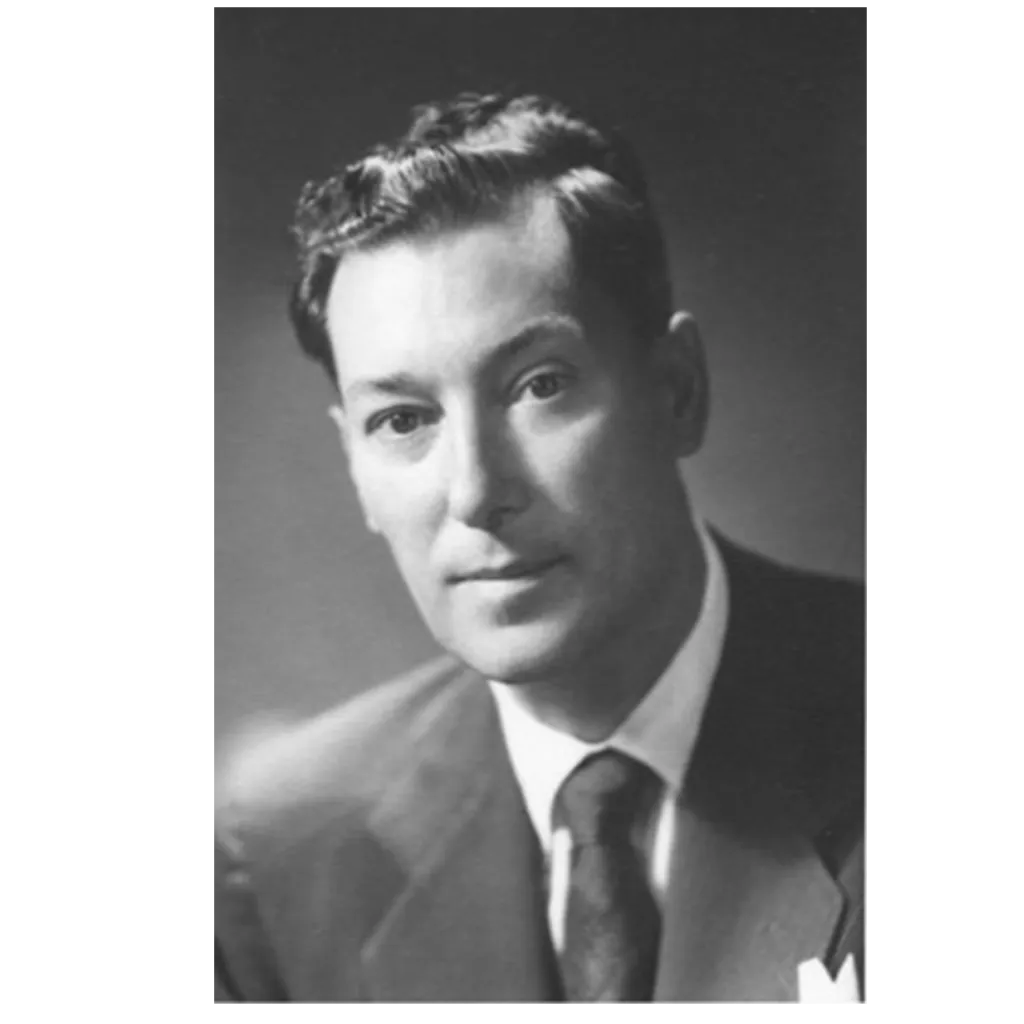
Neville Goddard (1905–1972) was a Barbadian-American lecturer whose teachings present scripture as psychological drama — a description of how consciousness operates. His central principle, the Law of Assumption, holds that whatever a person assumes to be true becomes their experienced reality. This framework is directly relevant to the Lingua Divina approach, which reads biblical text as a map of consciousness mechanics rather than theology.
Who Neville Goddard Was
Neville was born in Barbados in 1905 and moved to New York as a young man to study theatre. His intellectual and spiritual development was shaped significantly by his teacher Abdullah, an Ethiopian rabbi from whom he received an intensive grounding in Kabbalah and the psychological interpretation of scripture. Neville lectured and wrote prolifically from the late 1930s until his death in 1972, producing works including At Your Command (1939), Feeling Is the Secret (1944), and The Power of Awareness (1952). He taught without denomination or institution, drawing entirely from a personal reading of the Bible as a document about inner states.
The Law of Assumption
The Law of Assumption is the claim that consciousness — specifically the feeling of an assumption as already true — is the sole causative agent in the production of experience. Neville drew this directly from his reading of the I AM in the Bible. The name given to Moses in Exodus 3:14, Ehyeh Asher Ehyeh, meaning I AM THAT I AM, is understood by Neville as the declaration that the self-aware I AM is identical to the creative principle of reality. Whatever the I AM identifies with — whatever assumption follows the words I am — becomes the structure of experience.
This is not metaphor in Neville's framework. It is presented as the actual mechanism by which outer circumstances are formed. The assumption does not need to correspond to current physical fact. It needs only to be held as real in imagination until it hardens, as he put it, into the conditions of life.
Feeling Is the Secret
Central to Neville's method is the claim that feeling — not desire, not wishing, not visualisation alone — is what determines manifestation. The feeling of the wish fulfilled is the operative element. This aligns with what scripture encodes in the Ask, Believe, Receive sequence: belief is not intellectual assent but felt conviction, the inner certainty that the thing desired is already present. Neville's techniques, including the state akin to sleep, revision, and the use of scenes that imply the wish fulfilled, are all methods for inducing and sustaining that felt state.
God as Human Imagination
Neville's most foundational claim, developed especially in his later lectures, is that God and human imagination are identical. This is not a claim that humans are god-like or divinely assisted. It is a stronger claim: that the imagination — the capacity to form and feel images inwardly — is the divine creative power itself operating within the individual. The biblical assertion that man is made in the image of Elohim is read by Neville as a statement about imaging capacity. To imagine is to participate directly in the act of creation.
This reading is consistent with the Lingua Divina analysis of Genesis 1:26, in which the making of man in the image and likeness of Elohim points to a structural relationship between the creative principle and the consciousness capable of self-identification.
Neville and Scripture
Neville read the entire Bible as psychological allegory. Characters are not historical figures but personifications of states of consciousness. Events are not facts of external history but descriptions of inner movements. Jacob and Esau, for example, represent the natural and spiritual man. Egypt represents the state of limitation. The promised land is not a geographic destination but the state of consciousness in which desire is already fulfilled. This method of reading, which Neville developed through his engagement with Abdullah and his own intensive study, is what the Lingua Divina framework extends and formalises through linguistic analysis of the original Hebrew and Greek.
Across his lectures Neville returns to one consistent point about the text itself: Scripture is not casually written. It is a carefully and deliberately constructed drama of the mind — its vocabulary functional rather than decorative, nothing in it accidental. That construction is rooted in the Genesis creation story, which operates as the foundational vocabulary the rest of Scripture is written in.
His interpretation of The Law is specifically that it is a law of being — not a moral code but a description of how the inner always externalises. As within, so without is not poetic principle but operational fact in his system.
Key Works
Neville's written works are short and accessible. At Your Command introduces the basic principle that the I AM is the creative power and that all states follow from identification. Feeling Is the Secret details the role of felt states, particularly those induced at the threshold of sleep. The Power of Awareness is his most complete statement of the metaphysical basis of the law, presenting consciousness as the only reality and assumption as its creative instrument. His later lectures, widely available in transcript and audio, develop the scriptural allegory in greater detail and introduce the idea of God's plan unfolding through every individual life regardless of conscious manipulation.
His Place in the Lingua Divina Framework
Neville Goddard is referenced on Lingua Divina not as a theological authority but as a practitioner who arrived, through direct engagement with scripture, at conclusions consistent with what the original language of the text encodes. His reading of I AM, of the creative function of imagination, and of feeling as the mechanism of manifestation maps closely onto the analysis of Elohim, YHVH, and Ehyeh developed on this site. Where he offers practical instruction and the Lingua Divina framework offers linguistic verification, the two approaches are complementary.
