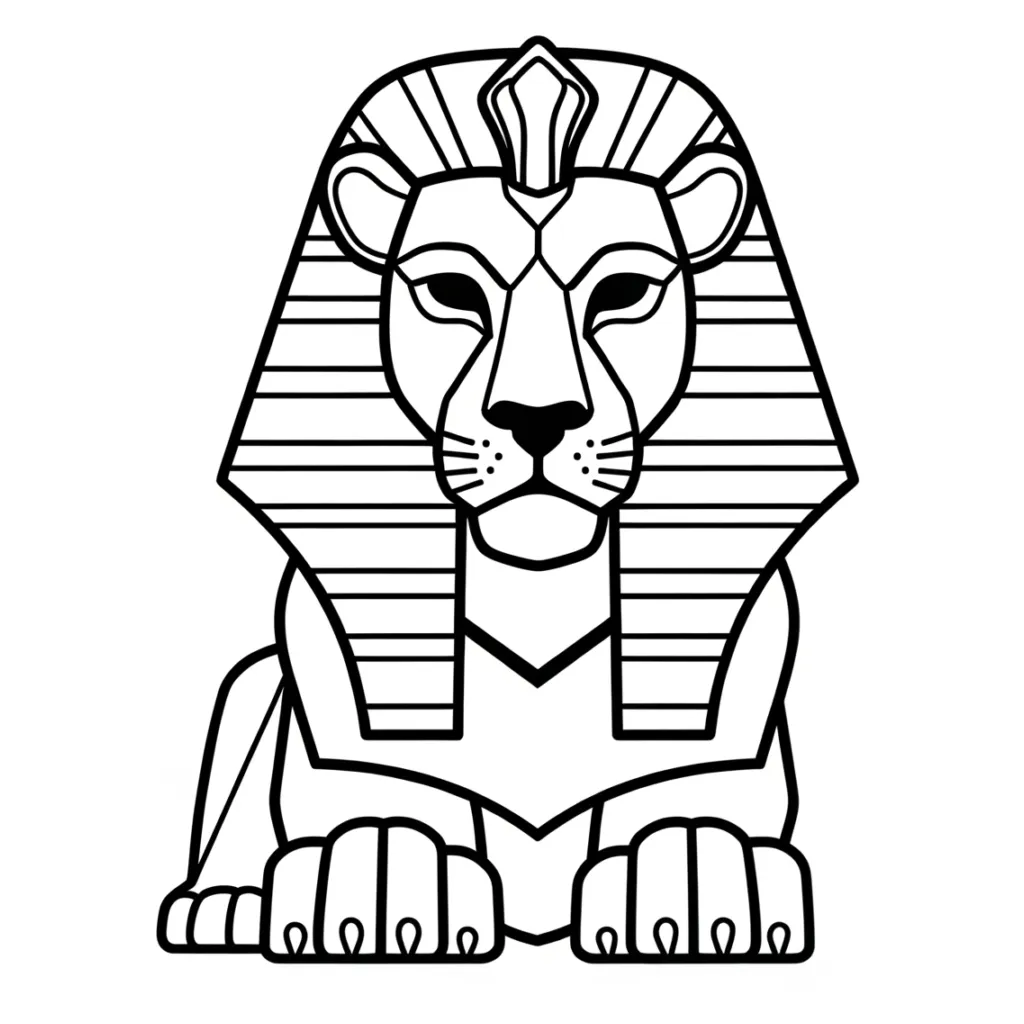
Judah is a young lion; like a lion full of meat you have become great, my son; now he takes his rest like a lion stretched out and like an old lion; by whom will his sleep be broken? The rod of authority will not be taken from Judah, and he will not be without a law-giver, till he comes who has the right to it, and the peoples will put themselves under his rule. — Genesis 49:9–10
Judah, whose name means praise (Hebrew: Yehudah), stands at the heart of biblical symbolism as the psychological state of praise. Through the YHVH/Ehyeh/Elohim framework, praise is understood as more than gratitude or outward expression. It is the living, creative current by which YHVH/LORD assumes an identity — a chosen Ehyeh/I AM — and Elohim, the Judges and Rulers of that I AM, bring it into being. Judah names that state: the one in which the assumed identity is already affirmed as true.
In Scripture, praise functions as a force of dominion, nowhere more clearly than in Jacob's blessing over Judah and in the intimate declarations of the Song of Solomon. Read through the lens of the linguistic engine, Judah represents the conscious act of assuming and sustaining the fulfilled state — not tentatively or prayerfully, but with the settled authority of one who already possesses what is declared.
Praise as Creative Dominion
Praise, understood through this framework, is not flattery or emotional performance. It is recognition of an inner reality already accepted as true — the I AM claim made from a position of certainty rather than petition. When YHVH/LORD occupies the state of Judah/praise, it does not ask; it affirms. This is Ehyeh/I AM expressed as settled identity, and once that identity is assumed, Elohim — the Judges and Rulers of that I AM — are bound to enforce it.
This is what the Ask, Believe, Receive principle describes at its centre: Ask is YHVH/LORD recognising the desire; Believe is Ehyeh/I AM assumed as already true; Receive is Elohim enforcing the outcome. Praise is the emotional atmosphere of the Believe stage — the inner declaration that what is assumed is already so, before outer confirmation appears.
The Lion: A Dominant Identity
Jacob's blessing over Judah in Genesis 49 presents him as a young lion. Read through the key, this image describes a dominant inner state — a governing assumed identity — rather than an external animal or historical power.
In Genesis 2, Adam names the animals. That act is significant: to name is to define the nature of a state, and the animals represent the various moods, impulses, and inner voices moving within consciousness. The lion, by its nature, is the one that dominates all others — it rests, undriven, because nothing displaces it. It is the governing mood.
Judah is a young lion; like a lion full of meat you have become great, my son; now he takes his rest like a lion stretched out and like an old lion; by whom will his sleep be broken? — Genesis 49:9
The lion of Judah is an assumed identity that does not need to chase, strain, or react. It rests. This is the psychological state of the fulfilled wish already occupied — settled, unshaken, unmoved by appearances that would contradict it. Other inner voices, competing moods, and reactive impulses fall beneath this dominant I AM because Elohim enforces identity after its kind. Once YHVH/LORD assumes the lion-state as Ehyeh/I AM, Elohim ensures that no other mood can displace it.
Ezekiel 19: When the Lion Is Raised by Circumstance
Ezekiel 19 opens as a song of grief — a mourning over lost inner rulership — and the contrast with Judah's lion is deliberate from the first verse.
Take up now a song of grief for the ruler of Israel, and say, What was your mother? Like a she-lion among lions, stretched out among the young lions she gave food to her little ones. — Ezekiel 19:1–2
The she-lion here is the originating conditioning of consciousness — what Scripture figures as "mother and father", the formative states that shape dominant moods before any conscious choice is made. These are not literal parents but the emotional inheritance, reactive habits, and inherited assumptions that raise inner governing states without deliberate assumption.
The young lions raised by her grow strong, learn to tear prey, and devour men. This describes a powerful mood that feeds on opposition, conflict, and fear. It dominates, but through reaction rather than assumption. Where Judah's lion holds its rest because the identity is already fully occupied, Ezekiel's lions must continually hunt to remain strong. They are sustained by struggle, and so they cannot be sovereign in any lasting sense.
The lamentation continues as these lions are captured, chained, and brought down. A dominant state rooted in reaction and fear cannot hold. It depends on circumstances to feed it, and when those circumstances change, the state collapses. The inner government built on conditioned reflex rather than conscious identity assumption ends precisely as the poem ends — in grief.
Ezekiel 19 is not condemning power, but misdirected power. It reveals what Elohim enforces when the dominant I AM is shaped not by deliberate assumption but by inherited conditioning and emotional reflex. The contrast stands: Judah's lion is assumed consciously through praise; Ezekiel's lion is raised unconsciously through circumstance. One rules by inner agreement. The other ends in lamentation.
The Rod of Authority: Sustained Identity
The rod of authority will not be taken from Judah, and he will not be without a law-giver, till he comes who has the right to it, and the peoples will put themselves under his rule. — Genesis 49:10
The rod of authority symbolises continuous inner government — not a momentary decision but a sustained assumed identity that Elohim continues to enforce. To hold it is to maintain the chosen I AM without surrendering it to conditions that would suggest otherwise. This is the cleaving principle: once YHVH/LORD has left the old familiar state and assumed the new identity, Elohim holds the union in place. The rod of authority in Judah means that the governing state of praise, once fully assumed, does not yield.
The BBE renders "sceptre" as "rod of authority" — a useful precision, since it foregrounds governance rather than mere symbol. The rod is not ornamental. It is the ongoing declaration that the chosen I AM remains the ruling identity within consciousness, and Elohim enforces it accordingly.
Praise in the Song of Solomon
The Song of Solomon — or Song of Songs — expresses Judah's dominion through intimate declaration. Where Jacob's blessing shows the lion at rest in external authority, the Song shows the same settled state expressed through union and cleaving. The Bride and the Beloved do not negotiate or petition. They declare identity and belonging as present fact:
My loved one is mine, and I am his: he takes his food among the flowers. — Song of Solomon 2:16
I am for my loved one, and my loved one is for me; he takes food among the lilies. — Song of Solomon 6:3
This language carries no hedging, no future tense, no request. It is the language of a state already fully occupied. Through the key, this is YHVH/LORD having assumed Ehyeh/I AM as spouse — the cleaving completed, the union enforced by Elohim as one flesh. The Song does not describe the pursuit of love; it describes love as the assumed state of being, declared and inhabited. This is praise as identity: the inner government is settled, the I AM is held, and Elohim has nothing left to do but enforce what is already claimed.
Praise in the Psalms
The Psalms, addressed to the inner choir, give voice to praise as the atmosphere of a stabilised assumed identity. The declarations are not petitions but affirmations — the sound of an inner government that has already ruled in favour of the I AM being claimed:
I will give praise to the Lord for his righteousness; I will make a song to the name of the Lord Most High. — Psalm 7:17
Let everything which has breath give praise to the Lord. Let the Lord be praised. — Psalm 150:6
Read through the framework, "the Lord" in these declarations is YHVH/LORD — present consciousness — and the praise is the sound of that consciousness occupying the declared I AM with full agreement. Every voice within — every breath, every faculty of the inner government — aligns with the assumed identity. Elohim enforces what the totality of inner voices affirms. Praise in the Psalms is the full inner choir singing in one accord with the chosen I AM.
Judah Among the Patriarchs
The name Judah carries its own identity code: praise is the nature of the state, and Elohim enforces what the name already declares. Alongside Abraham, whose name encodes multiplication; Joseph, who encodes increase; and Israel, who encodes prevailing — each name is a seed carrying the harvest within it before the narrative unfolds.
Judah's place in the patriarchal line is no accident. He is the fourth son of Jacob and Leah, passed over in birth order, yet elevated in blessing. The narrative itself demonstrates the key: it is not position or circumstance that determines outcome, but the identity assumed and held. Judah, whose brothers shall praise him and before whom kings bow (Genesis 49:8), is the one whose assumed state — praise — generates the conditions of elevation. Elohim enforces identity after its kind. Judah assumes praise; praise generates dominion; dominion is enforced.
Living the State of Judah
To occupy Judah is to allow a single, consciously chosen identity to govern within. The lion is that identity — resting in certainty, requiring no external confirmation, refusing displacement. The rod of authority is sustained attention, the ongoing refusal to abandon the assumed I AM for a reactive, fear-fed alternative. Praise is the full inner sound of that occupancy: YHVH/LORD settled in Ehyeh/I AM, with Elohim enforcing the reality that must follow.
This is what sin as a jurisdictional error contrasts against. Where sin is the misfiling — YHVH/LORD presenting a fragmented or contradictory I AM — Judah is the clean filing: the identity assumed without qualification, held without retreat, declared without negotiation. The I AM is fully occupied, and Elohim rules in its favour.
The Lion of Judah Within
The Lion of Judah is inner authority — an assumed identity named, occupied, and maintained. Ezekiel's lamentation warns of what Elohim enforces when conditioned fear-states govern in the place of conscious assumption. Judah's praise shows what follows when YHVH/LORD deliberately occupies the chosen I AM: a lion at rest, a rod of authority that does not depart, and a world arranged in obedience to the identity held within.
The union expressed in the Song of Solomon and the declarations of the Psalms are the same inner event described at different registers: consciousness cleaving to its chosen identity, held there by Elohim, declared in the language of praise. The state of Judah is not a goal to reach but an identity to assume — and once assumed, the rod of authority stays.
About The Author | The Four: Fathers of the Law | Jacob's Twelve Son's and Tribes Series | Judah Series | Praise Series | Animals Series
